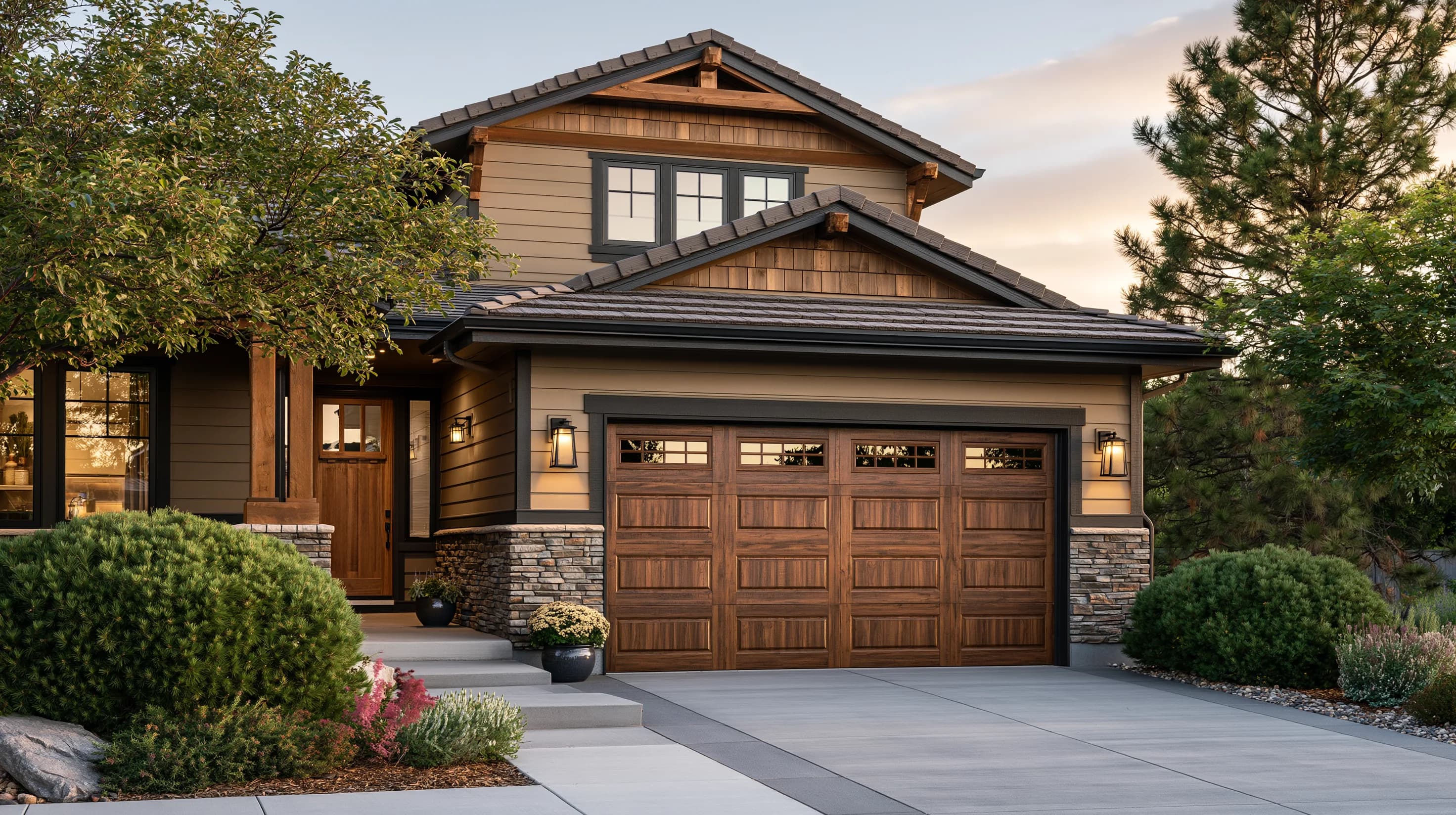
Colorado homeowners deal with a combination of climate factors that most garage door guides don't account for. The Front Range isn't just cold in winter — it's extreme in temperature swings, UV exposure, spring hail, and occasional wind events that put garage door systems through stress patterns that accelerate wear.
Temperature Swings and Spring Tension
Metal contracts in cold and expands in heat — and the torsion spring above your garage door is no exception. Along the Front Range, a spring that's already near the end of its service life often fails in the coldest weeks of winter when thermal contraction adds tension to an already-loaded coil.
Colorado homeowners who notice their garage door getting slower or louder in cold weather are often seeing early spring fatigue. The door works fine in September; by January, the same spring that was marginal is struggling. A pre-winter inspection catches this before a January failure.
Freeze-Lock and Bottom Seal Issues
Colorado gets wet, heavy snowfall followed by rapid freeze-thaw cycles. The rubber bottom seal on a garage door can freeze to the concrete slab overnight, especially on north-facing or shaded garages. Forcing the opener when the seal is frozen can damage the seal, the cables, and in some cases the door panels or opener drive system.
If freeze-lock is a recurring issue, a threshold seal — which creates a gasket-style contact instead of a flat surface press — significantly reduces the risk.
Colorado's UV Exposure
Denver sits at 5,280 feet with an average of 300 sunny days per year. At altitude, UV radiation is meaningfully more intense than at sea level. For garage doors, the practical effects depend on material:
- Steel doors: Factory paint finishes hold up well, but south- and west-facing doors fade noticeably faster than shaded ones. Chalking and oxidation are common on older steel doors with worn finishes.
- Wood and wood-composite doors: UV accelerates finish degradation significantly. Regular refinishing is more critical in Colorado than in lower-altitude or cloudier climates.
- Aluminum and glass doors: Generally UV-stable, but metal frames on south-facing garages can get very hot in summer, which stresses seals and adhesives over time.
Hail and Panel Damage
The Front Range sees measurable hailstorms most summers. Garage doors take direct hail hits from any storm approaching from the north or west — which is most Front Range storms. Steel door panels dent from large hail; the degree of damage depends on gauge thickness.
Heavier-gauge steel (24-gauge is thicker than the common 26-gauge) and polyurethane-filled doors are more resistant to hail denting than thinner, hollow-back panels. This is worth considering in communities that see regular hail exposure.
High-Altitude Effects on Openers
Some opener motors are rated for sea-level operation and operate slightly differently at Denver's elevation. This is rarely a functional problem for standard residential openers, but it's worth knowing that motors work a bit harder at altitude — particularly for heavier doors. Maintaining proper door balance so the opener isn't compensating for spring imbalance is more important in high-altitude garages.
The Practical Maintenance Takeaway
Given Colorado's climate, the practical maintenance schedule for most Denver-area homeowners includes spring lubrication after winter (fresh lube on springs, rollers, and hinges), a fall inspection before the cold sets in, and attention to the bottom seal and weatherstripping condition each year. Call Metro Denver Garage Door at (303) 988-4801 if you want a technician to look at what your door is actually telling you.